A farewell in excellence: Celebrating Miracle Okoth Okumu Mudeyi’s journey to Yale Law School
by admin on | 2026-08-05 12:48:09
Share: Facebook | Twitter | Whatsapp | Linkedin Visits: 2812
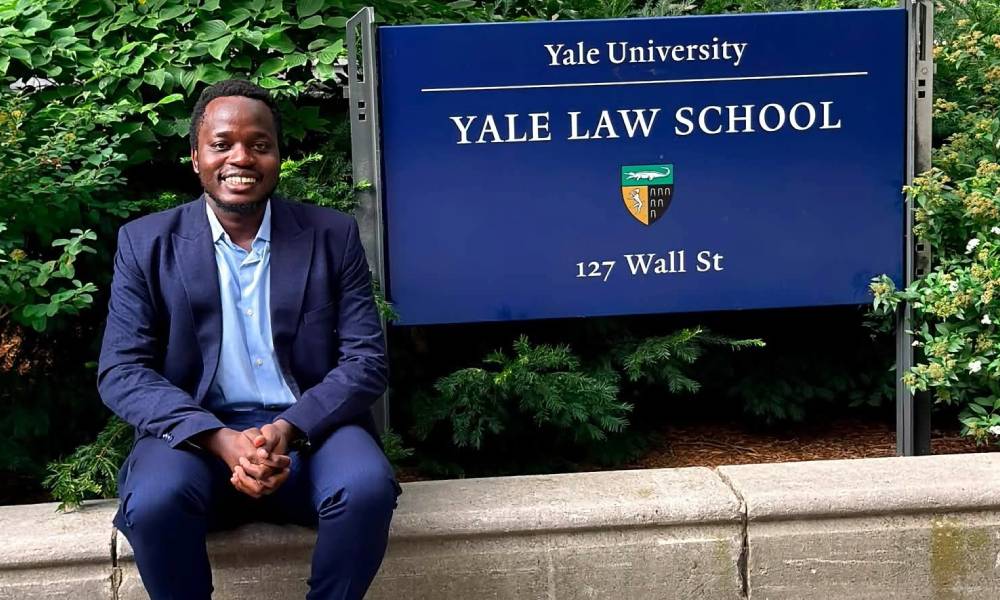
At The Platform for Law, Justice and Society, we have long understood that institutions are, at their core, the sum of the people who give themselves to their work with purpose, intellect, and quiet conviction. Today, we pause to celebrate one such individual, Miracle Okoth Okumu Mudeyi, whose admission to Yale Law School for a Master of Laws marks not only a personal milestone but a moment of collective pride. Miracle’s acceptance into Yale, as the first Kenyan in over three decades to secure this distinguished opportunity, is no ordinary achievement. It is a testament to intellectual rigor, sustained discipline, and a fidelity to the ideals of justice that transcend borders. It is also, in a profound sense, a continuation of the very ethos he embodied during his time with us. As Senior Editorial Assistant, Miracle brought to the Platform a rare blend of analytical clarity and editorial sensitivity. He approached legal texts not merely as documents to be refined, but as living instruments of thought, tools through which ideas could be sharpened, arguments deepened, and public discourse elevated. His editorial hand was both precise and generous.He demanded excellence of the work, while always making space for the voices behind it to emerge stronger and more coherent. In the often-unseen architecture of legal publishing, where rigor must meet readability and scholarship must engage the public, Miracle distinguished himself as a steady and discerning presence. He understood that the written word carries weight not only in courtrooms and classrooms, but in shaping the civic imagination. Through his contributions, the Platform has been better able to fulfill its mandate which is to bridge law and society with clarity, integrity, and purpose. Yet, beyond his technical brilliance, it is Miracle’s intellectual curiosity and quiet leadership that have left an enduring imprint. He has been, to colleagues and collaborators alike, a source of thoughtful engagement, someone who listens deeply, questions carefully, and writes with intention. In an age often defined by haste, he has reminded us of the enduring value of deliberation. His journey to Yale is, therefore, not a departure but an expansion. It carries with it the aspirations of a generation of Kenyan legal thinkers, and the promise of new conversations between local realities and global scholarship. We have no doubt that he will approach this next chapter with the same humility and excellence that have defined his work thus far. As an institution committed to the pursuit of justice and the cultivation of legal thought, we take immense pride in having been part of Miracle’s journey. His achievement affirms what we hold to be true. That Kenyan scholarship, when nurtured with care and conviction, stands comfortably among the best in the world. We extend our deepest gratitude for his service, his intellect, and his unwavering commitment to the craft of legal writing. We wish him every success as he steps onto this global stage, confident that he will not only excel, but also inspire. From all of us at The Platform for Law, Justice and Society, thank you, Miracle, and onward