The resource curse reimagined: Will the Dangote Lamu refinery empower local communities or institutionalise marginalisation?
by admin on | 2026-09-04 00:52:59
Share: Facebook | Twitter | Whatsapp | Linkedin Visits: 90
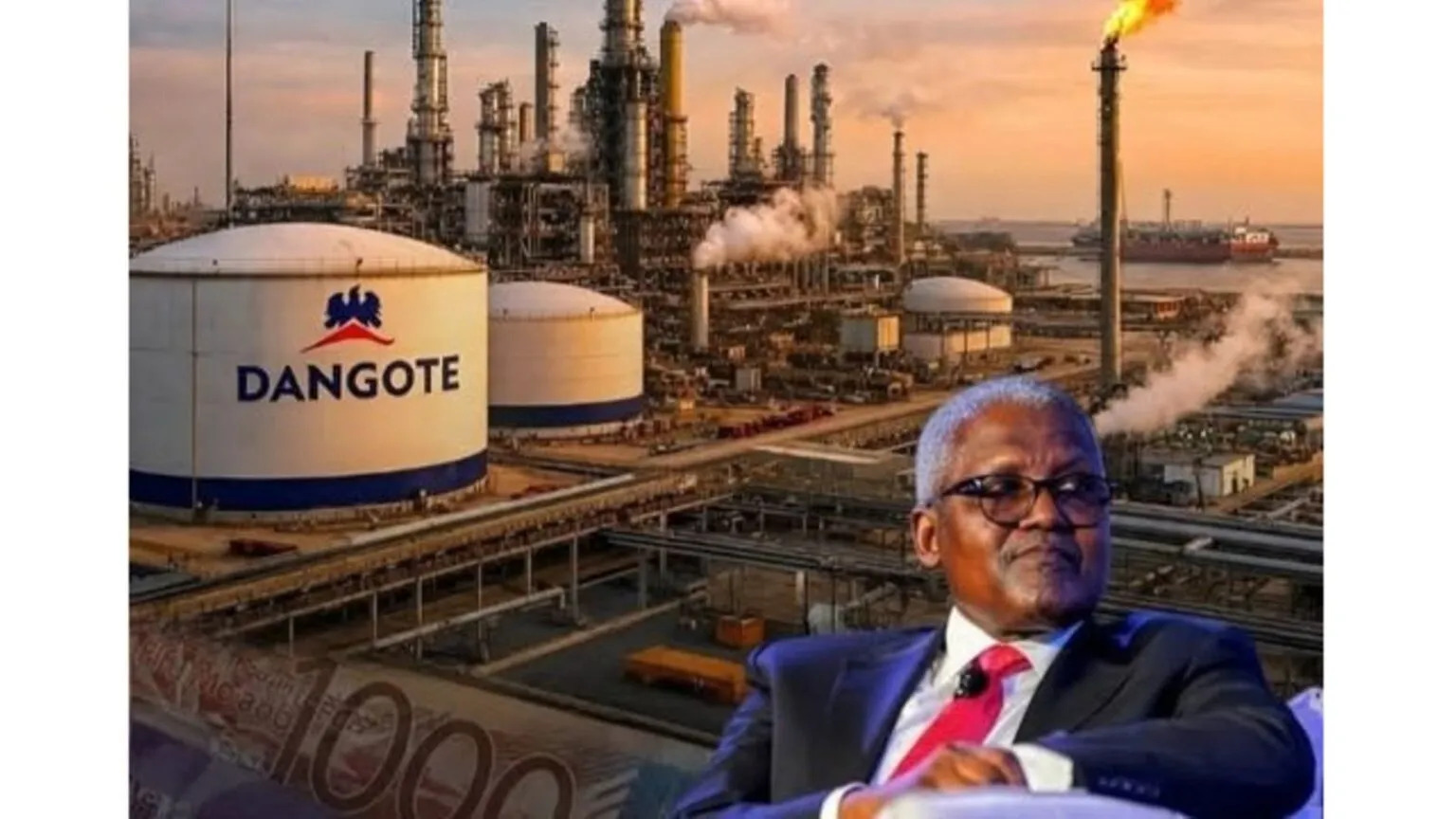
Abstract
By Donald Nyongesa Lamu Old Town has stood on Kenya\'s northern coast for the better part of seven centuries, inscribed by UNESCO in 2001 as evidence that a Swahili trading culture could flourish there without industrial machinery. In July 2026, Dangote Industries selected Lamu as the site of a $17 billion, 700,000-barrel per-day oil refinery, the largest private investment in Kenyan history and the second anchor, after Lekki, of a two-coast refining empire spanning the continent. Within weeks, a constitutional lawyer had threatened High Court action over the absence of public participation, Greenpeace Africa was weighing a legal challenge to the environmental approval process, and Lamu\'s own Council of Elders had begun grassroots mobilisation against a project many residents first learned of through press releases rather than consultation. This is not Lamu\'s first encounter with mega-infrastructure: in 2018, the High Court awarded local fishing communities KES 1.7 billion for the state\'s failure to consult them before constructing the Lamu Port a decade earlier. This article argues that Kenya\'s constitutional and statutory architecture, Article 69, the Community Land Act\'s benefit-sharing provisions, and the Petroleum Act\'s local content requirements, already supplies the tools to prevent a repetition of that failure, tools considerably stronger on paper than those available to comparable communities in Nigeria\'s Niger Delta. Drawing on Nigeria\'s Host Communities Development Trusts, Ghana\'s tiered local-content ownership requirements, and the cautionary tale of Chevron\'s decades-long evasion of an Ecuadorian court judgment through investor state arbitration, the article concludes that whether Lamu becomes a template for equitable resource extraction or its latest casualty will turn not on the discovery of new legal rights but on whether Kenya\'s own regulators enforce the rights that already exist before, rather than after, the ground is broken.
I. Introduction
Lamu Old Town has occupied its stretch of the Kenyan coast for the better part of seven hundred years, its coral-stone houses and carved wooden doors sufficiently intact and sufficiently continuous a record of Swahili civilisation that UNESCO inscribed the settlement as a World Heritage Site in 2001, the first in Kenya to be so designated for its built rather than natural heritage. What is now converging on that coastline is not modest by any measure available to compare it against. In July 2026, Dangote Industries confirmed that it had selected Lamu, ahead of rival sites in Tanzania and Uganda, to host a refinery designed to process 700,000 barrels of crude oil a day, financed through a combination of internally generated cash, bond issuance and a planned initial public offering, at an estimated cost that has been reported variously between KES 2 trillion and KES 2.6 trillion, in the region of $17 billion at prevailing exchange rates. It would be the largest single private investment in Kenya\'s history, the second anchor, after the company\'s flagship facility in Lekki, Nigeria, of what industry observers have begun describing as a two-coast Dangote refining corridor spanning the African continent from the Atlantic to the Indian Ocean. Kenya\'s government has committed approximately $165 million in seed capital and appointed Deputy President Kithure Kindiki to chair a coordinating committee for the project\'s implementation; groundbreaking is targeted for before the end of 2026.